Pipe Fitting in Brooklyn, NY
Pipe fitting is the part of plumbing that happens before anything is visible: measuring, cutting, joining and supporting pipe so it carries water where it is needed for decades without anyone thinking about it.
Call (347) 506-2598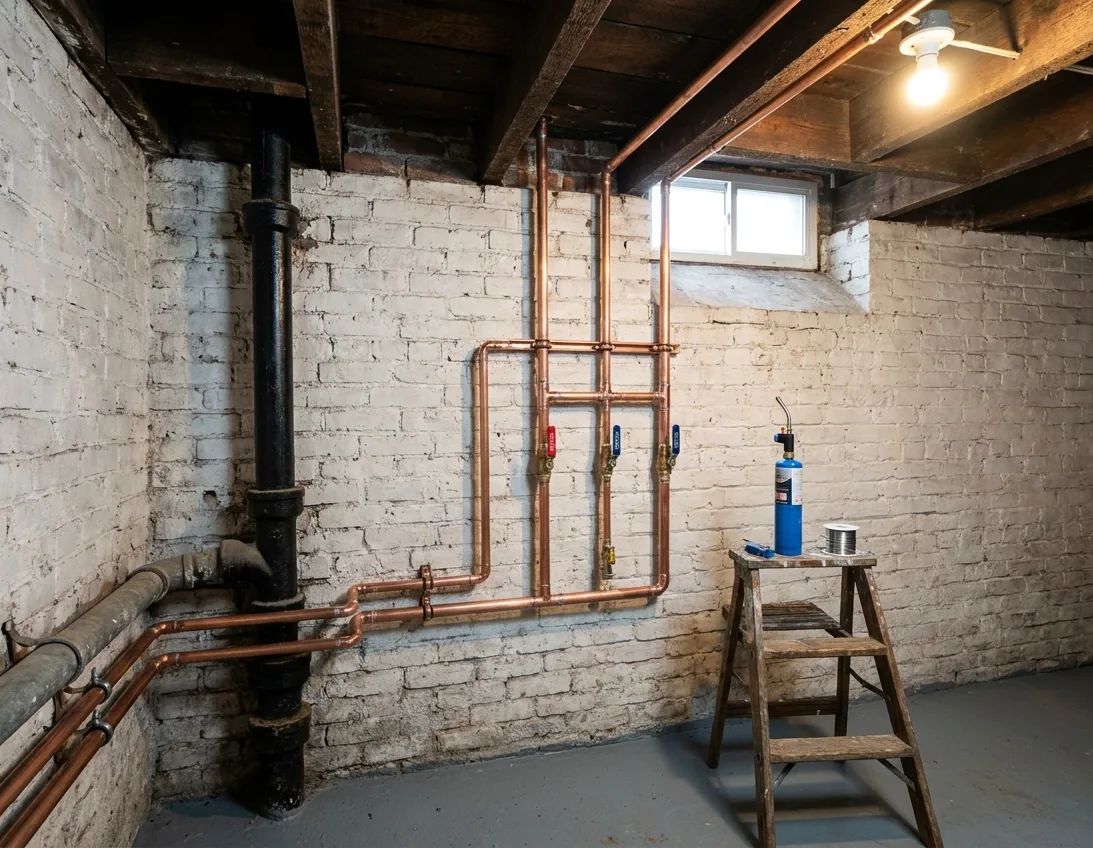
Fitting work we take on
Elite Pipe Solutions handles fitting for repairs, renovations and upgrades in homes and apartments, from a single new valve to a complete new branch for a kitchen moved to the other side of the room.
- New supply branches for kitchens, bathrooms and laundry
- Main and branch shutoff valves, including floor-by-floor isolation in a house that has only one valve
- Hose bibs for a backyard or garden
- Transitions from galvanized or brass to copper or PEX
- Re-routing pipe out of the way of new walls and openings
- Pipe supports and hangers for runs that sag or rattle
Choosing the material
Copper
Rigid, durable and tidy when it is exposed in a cellar or behind an access panel. Soldered or pressed fittings, depending on the space and whether an open flame is sensible near old timber.
PEX
Flexible tubing that can be snaked through an existing wall with far less opening than rigid pipe. Well suited to repiping finished rooms in a brownstone.
Black iron
The usual choice for natural gas piping. Threaded joints, properly supported, pressure tested before use.
Cast iron and PVC drains
Cast iron is quieter inside walls and between floors. PVC is lighter where noise is not a concern. Both join to old cast iron with banded couplings.
Water arriving from the city's upstate reservoirs is soft and low in minerals, so scale build-up inside new pipe is not the worry it is in hard-water regions. What matters more is avoiding the dissimilar-metal joints that cause corrosion.
Why the joint between old and new matters
When steel and copper touch in a wet pipe, the steel corrodes faster than it would on its own. That is why a proper transition uses a dielectric union or a brass nipple between them. Skipping it is one of the most common causes of the leak we are called to a few years after someone else's renovation.
Old threads need care as well. Galvanized pipe that has been in a wall since the 1930s can snap when a wrench is put on the fitting next to it, so we hold the old pipe with a second wrench while working, and cut back to sound pipe when the threads will not take it.
Planning fitting for a renovation
If you are moving a kitchen or adding a bathroom, involve the plumber before the walls are framed. Drain lines need a steady fall, and in a rowhouse with joists running side-to-side that can decide where a toilet can go. We can look at the space, tell you where pipe can and cannot run, and rough in the supply and drain lines before the walls close.
Some work in New York City needs a permit filed with the Department of Buildings. We will tell you at the planning stage whether your job does, before anything starts.
Frequently asked questions
Is PEX allowed in New York City homes?
PEX is used for water supply in many NYC renovations. Whether it suits your job depends on the building and the scope, which we confirm before starting.
Can you add shutoff valves to an old house?
Yes. Adding a valve for each floor, or for each fixture, is one of the most useful upgrades in an older house, because the next leak can then be isolated without shutting off the whole building.
Do I need a permit for new plumbing?
It depends on the work. Like-for-like repairs often do not; new lines, gas work and larger alterations often do. We tell you before work begins.