Repiping in Brooklyn, NY
When the supply pipes in a house are failing all along their length, repairing them one leak at a time stops making sense. Repiping replaces the water lines in one planned job instead of a dozen emergency ones.
Call (347) 506-2598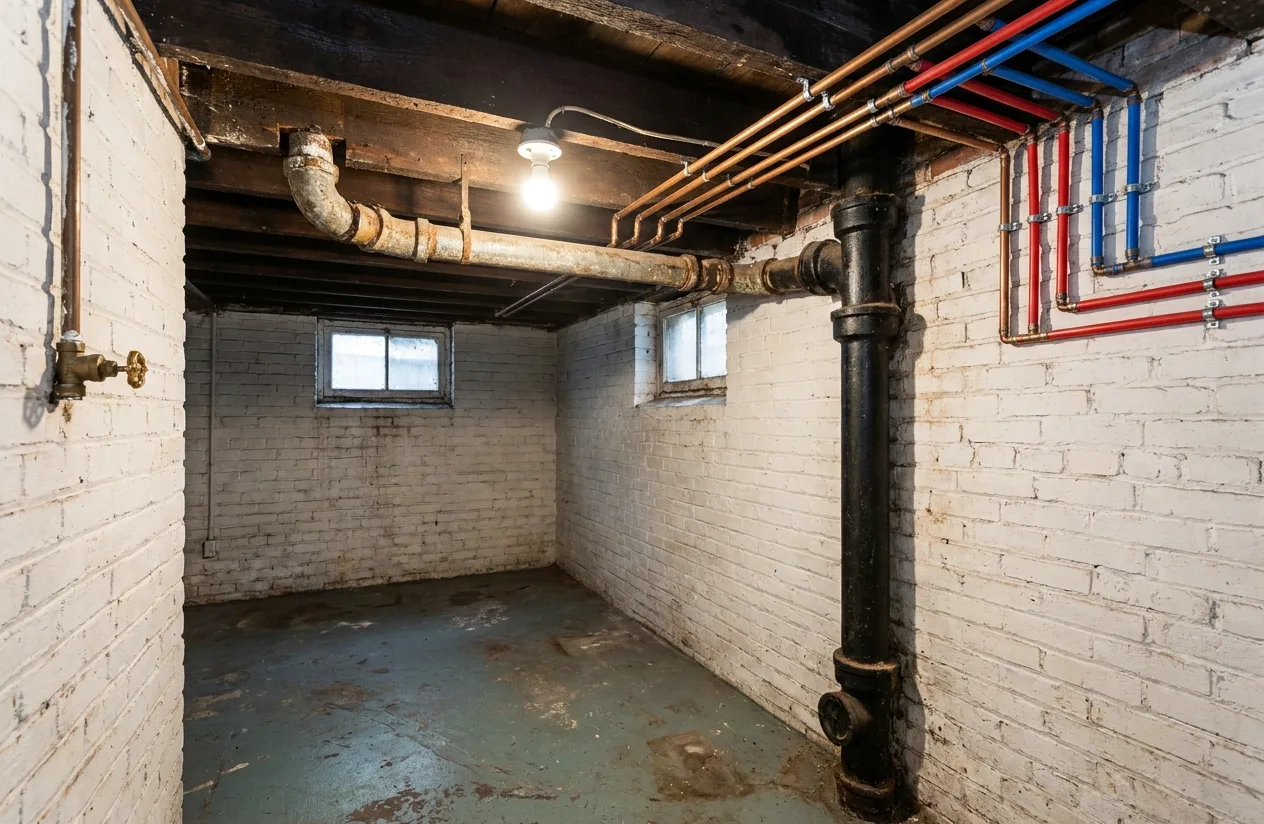
Signs a building needs repiping
- Brown or orange water when a tap is first opened, especially hot water
- Pressure that is good on the garden floor and weak on the top floor
- Repeated pinhole leaks in different places
- Visible rust weeping from threaded joints in the cellar
- Original galvanized pipe that has never been replaced
- A lead service line or lead pipe sections inside the house
Any one of these on its own can have another cause. Two or three together, in a house with original steel pipe, usually mean the pipe itself has reached the end of its life.
How repiping works in a brownstone
Survey the existing lines
We trace where the risers go up through the house, where each bathroom and kitchen branches off, and what condition each section is in.
Plan routes with the least opening
Closets, chases, the space behind a bathtub and the cellar ceiling are used first. Flexible PEX lets new lines follow old routes through walls with small, neat openings.
Run new lines alongside the old
The new pipe is installed while the old system still works, so the house is without water only for the final changeover.
Switch over and test
Each fixture is connected to the new line, the system is pressure tested, and the old pipe is disconnected and capped or removed.
Partial repiping
Not every house needs everything replaced at once. A common and sensible approach is to replace the main line from the meter and the risers first, since they carry water to every floor, then replace branches as bathrooms and kitchens are renovated. We can plan the work in stages so that each stage connects cleanly to the next.
Lead pipe
Brooklyn homes built before the early 1960s can still have a lead service line coming in from the street, and occasionally short lead sections inside the house, especially at old toilet connections. Lead is soft, dull grey and shows a shiny silver colour when scratched. If we find it during any job, we point it out, and it can be replaced as part of a repipe.
Replacing lead pipe inside the house and replacing the service line from the street are related but separate jobs. Elite Pipe Solutions can quote either or both, and explain what the street side involves.
Related services
Frequently asked questions
How long does it take to repipe a brownstone?
It depends on the number of floors and bathrooms. A single-family brownstone is usually measured in days rather than weeks, and the house keeps working water for most of that time.
Will my walls be destroyed?
No. Routes are planned through closets, chases and the cellar, and openings in finished walls are kept small and cut cleanly for patching.
Copper or PEX for a repipe?
Often a combination: copper for exposed mains in the cellar, PEX for runs that have to be fed through finished walls. We explain the trade-offs for your building.